Bosnia
The Vagina MonologuesBosnia is both a place marked by wartime sexual violence and the focus of a journey from witnessing an image to listening to survivors. The narrator’s response to a photograph of six young women returned from a rape camp leads her to travel to the region, interview Bosnian refugees, and make one woman’s story the basis of a monologue dedicated to the women of Bosnia.
The photograph and the decision to go
In 1993, walking along a Manhattan street, the narrator passed a newsstand and saw a disturbing photograph on the front page of Newsday. It showed six young women who had just been returned from a rape camp in Bosnia. The image did not remain distant news: the narrator describes it as the moment she knew she had to go and meet the women.
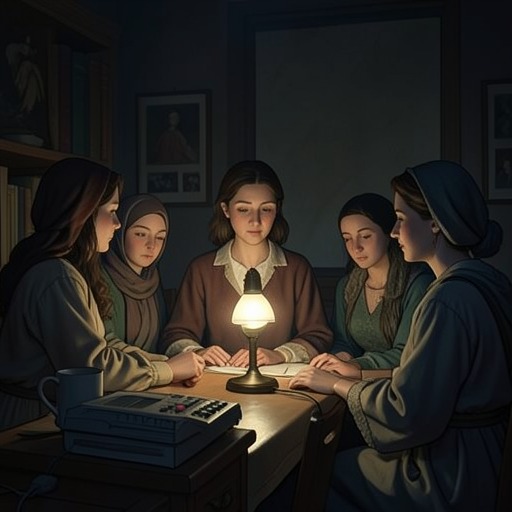
The account also describes mothers and daughters recently reunited in a gymnasium. Although a large group had gathered, none of the women could look at the camera. The image and this description place the survivors’ distress at the center of the narrator’s decision, while preserving a distinction between seeing a photograph and hearing directly from the people whose lives it represented.
Interviews and first-hand witness
In 1994, with the support of Lauren Lloyd, the narrator spent two months in Croatia and Pakistan interviewing Bosnian women refugees. She met and spent time with them in camps, cafés, and refugee centers, and returned to Bosnia twice afterward. The sequence matters: the book presents her journey not as a single visit prompted by a headline, but as an effort to remain in contact with survivors and listen to their accounts in the places where refugees gathered.
The narrator’s outrage on returning to New York was sharpened by the reported scale and context of the violence. She describes estimates of 20,000 to 70,000 women being raped in Europe in 1993, and identifies rape as a systematic tactic of war. What she could not understand was that, despite this scale, no one was doing anything to stop it. A friend challenged her surprise by pointing out that more than 500,000 women were raped each year in the United States, which was not officially at war. The comparison connects wartime rape in Bosnia to a broader, often normalized violence rather than treating it as an isolated foreign crisis.
From testimony to monologue
The monologue “My Vagina Was My Village” is based on one woman’s story. The narrator thanks the woman for sharing it and expresses admiration for her spirit and strength, as well as for the survivors she met in the former Yugoslavia. She dedicates the piece to the women of Bosnia. The dedication makes the work’s relationship to testimony explicit: it arises from a particular woman’s account, while extending its recognition to a wider community of survivors.
The book’s larger method of collecting women’s accounts gives this act of adaptation a wider context. The narrator says that she interviewed more than two hundred women for the project, speaking with women of different ages, relationship statuses, sexual orientations, professions, and racial and ethnic backgrounds. At first, women were reluctant to speak; once they began, the narrator found that they had much to say. The Bosnia account belongs to this larger practice of making room for experiences that public language and social convention often leave unspoken, without suggesting that one survivor’s story stands for every woman’s.
Silence, knowledge, and public response
The book links the difficulty of speaking about sexual violence to a broader history of silence around women’s bodies. The narrator recalls never hearing the accurate word for one part of the female body while growing up, and says that this absence left her exposed to shaming language and to the belief that men, including lovers and physicians, knew more about women’s bodies than women themselves. In this context, listening to Bosnian survivors and rendering one woman’s testimony as a monologue challenges not only silence about wartime violence but also the assumptions that displace women as authorities on their own experience.
The narrator also describes how audiences and readers respond when women are given a public space to speak. After performances, women approach her to tell their own stories, offer suggestions, and communicate their reactions. This recurring exchange echoes the interviews behind the monologues: the work does not end with an account being presented onstage, but continues through further testimony. Bosnia’s significance in the book thus rests on a double movement—from a photograph that compels attention to listening that makes an individual survivor’s account part of a larger, continuing conversation about violence against women.